






-150x150.png)




-150x150.png)










Sharrow Propeller Explained: New Boat Prop Design Changing Marine Propulsion
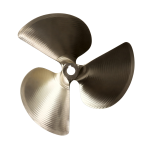
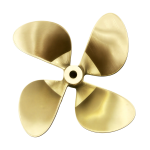
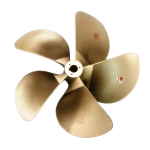
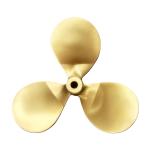
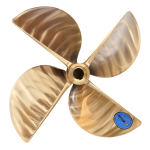
For more than a century, most boat propellers have followed the same basic design: several blades extending outward from a central hub. While materials and manufacturing have improved, the core concept has remained largely unchanged.
That’s starting to shift with the introduction of the Sharrow Marine Propeller, a radically different propeller design that replaces traditional blades with looped shapes. Developed by Sharrow Engineering, the propeller aims to improve efficiency, reduce noise, and increase thrust by changing how water moves through the prop.
Some engineers even describe it as the first major rethink of marine propeller design since the early 19th century.
This guide explains what the Sharrow Propeller is, how it works, and whether it actually performs better than traditional boat propellers.
What Is the Sharrow Propeller?
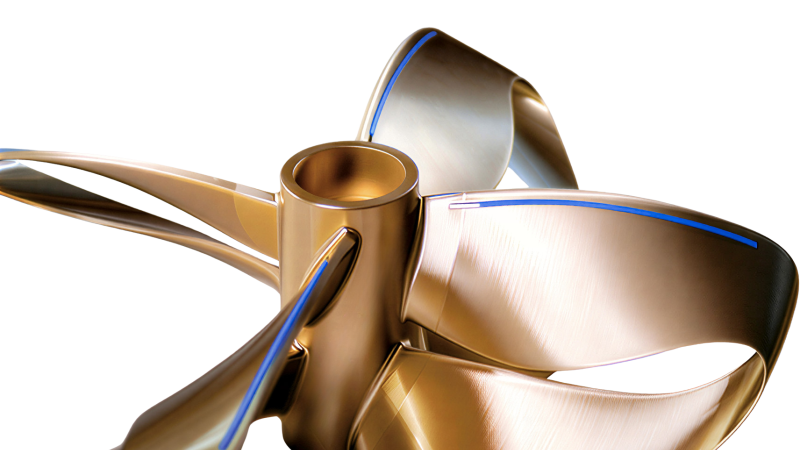
The Sharrow Propeller is a loop-based marine propeller design that replaces conventional blade tips with continuous loops.
In a traditional propeller, each blade has a free tip. As the prop spins, water pressure differences form vortices at these tips. Those vortices create drag, noise, and wasted energy.
The Sharrow design eliminates those open tips entirely.
Instead, each blade forms a closed loop that connects back to itself, creating a toroidal shape. The result is a propeller that channels water through a continuous path rather than shedding energy off the blade tips.
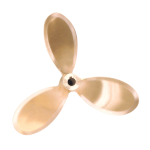
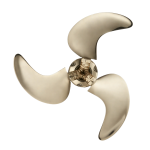
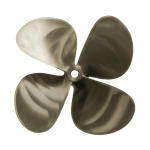
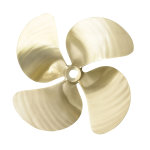
Because of this unusual geometry, the propeller looks very different from the typical three- or four-blade prop used on most boats.
How the Sharrow Propeller Works
Although the design looks unusual, the core concept is simple: reduce energy loss caused by tip vortices.
In traditional propellers, pressure differences between the front and back of the blade cause water to spill off the tips, forming swirling vortices. These vortices waste energy and contribute to cavitation.
The Sharrow Propeller reduces that effect in several ways:
-
Closed-loop blades
The looped shape prevents water from spilling off blade tips. This helps maintain pressure and improves thrust.
-
Controlled water flow
Water enters the front of the loop, travels through the curved channel, and exits the rear section of the blade.
-
Reduced cavitation
Because the pressure difference at the tips is minimized, the design significantly reduces tip vortex cavitation.
Independent testing at the University of Michigan Marine Hydrodynamics Laboratory has been used to evaluate these hydrodynamic effects.
Performance Benefits of the Sharrow Propeller
Manufacturers and independent testers report several potential advantages compared with traditional propellers.
Increased thrust and speed
Tests have shown that some boats experience higher top speeds and faster acceleration when equipped with a Sharrow Propeller. By reducing wasted energy from tip vortices, more of the engine’s power is converted into forward thrust.
Improved fuel efficiency
Better hydrodynamic efficiency can translate into lower fuel consumption.
Testing by BoatTEST reported fuel efficiency gains at several cruising speeds. In some cases, boats achieved up to 18 percent better fuel economy around typical cruising RPM ranges.
Better handling
The Sharrow Propeller can also improve boat handling, particularly in tight maneuvers.
Because the propeller maintains stronger water flow through the blades, it can generate greater reverse thrust, which helps with docking and stopping.
Quieter operation
Traditional propellers often produce noticeable noise from cavitation and vortex formation. The loop design significantly reduces these effects, which can make the boat quieter at cruising speeds.
The propeller was recognized as one of Time Best Inventions partly due to these efficiency and noise improvements.
Potential Downsides of the Sharrow Propeller
Despite its advantages, the Sharrow Propeller is not perfect. Several limitations still exist.
Higher cost
One of the biggest barriers is price. Sharrow propellers are significantly more expensive than traditional aluminum or stainless steel propellers.
The complex geometry requires advanced manufacturing methods such as CNC machining, which increases production costs.
Limited availability
Most current models are designed for outboard motors, particularly mid-size recreational boats. Options for larger inboard vessels are still limited.
Unknown long-term durability
Because the design is relatively new, there is less long-term data about wear, repairability, and lifespan compared with conventional propellers.
Are Sharrow Propellers Repairable?
Repairing a Sharrow Propeller may be more complicated than repairing a traditional prop.
Standard propeller repairs often involve reshaping or welding damaged blade tips. With the looped design, damage could affect the structural integrity of the entire loop.
To address this concern, Sharrow offers a protection plan called Sharrow Care, which helps cover damage caused during normal operation.
Will Loop Propellers Become the Future of Boat Propulsion?
The Sharrow Propeller represents one of the most interesting developments in marine propulsion in decades. Its looped design challenges long-standing assumptions about how propellers should work.
However, widespread adoption will depend on several factors:
-
Lower manufacturing costs
-
More available sizes and applications
-
Long-term durability data
-
Acceptance by boat manufacturers and engineers
If these challenges are addressed, loop-based propellers could become a common sight on recreational and commercial vessels.
For now, the Sharrow Propeller remains a promising innovation that may reshape how boats move through the water.
Leave a comment