








-150x150.png)







-150x150.png)









VEEM Interceptor Strips: What They Are and How to Install Them
Fine-tuning propeller performance has traditionally required hauling a vessel out of the water and reworking the propeller pitch. That process takes time, costs money, and often means downtime for the boat.
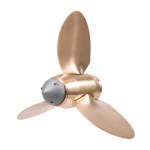
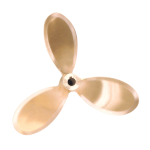
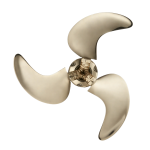
VEEM Ltd introduced a different approach with its Interceptor technology. Instead of modifying the propeller itself, small removable strips can be fitted to the trailing edge of each blade to adjust the effective pitch.
These interceptor strips allow divers to adjust propeller performance directly in the water, making it possible to match the propeller more precisely to the engine, load, and operating conditions.
This guide explains what VEEM Interceptor Strips are, how they work, and how to install or replace them.
What Are VEEM Interceptor Strips?
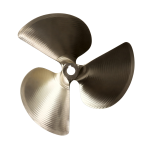
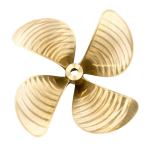
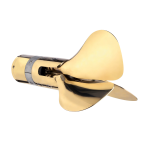
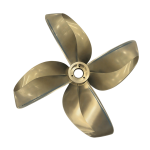
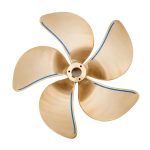
VEEM Interceptor Technology uses a small engineered protrusion placed on the trailing edge of the propeller blade’s pressure face.
This protrusion creates a controlled surface discontinuity that forms a wedge of circulating water behind the blade. The effect increases lift in that section of the blade without adding the frictional drag normally associated with larger blade modifications.
In practical terms, interceptor strips allow the effective pitch of the propeller blade to be adjusted without changing the propeller itself.
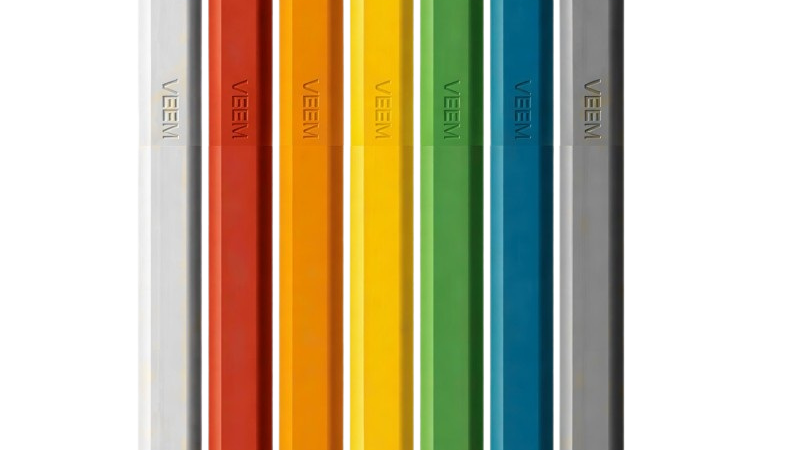
The strips slide into a groove built into the propeller blade. By changing the height of the strip, operators can slightly increase or decrease the load placed on the engine.
This makes it possible to optimize propeller performance for different conditions.
Why Interceptor Strips Are Used
Interceptor strips provide a way to fine-tune propeller performance without removing the propeller from the boat.
Small changes in operating conditions can affect how efficiently a propeller works. For example:
-
Changes in vessel displacement
-
Seasonal water temperature differences
-
Hull fouling or cleaning
-
Engine upgrades or repowers
-
Fuel efficiency tuning
Because interceptor strips can be swapped underwater, adjustments can be made quickly by a diver instead of scheduling a haul-out.
This approach is often described as a “splash and forget” solution, since once the correct configuration is found, the propeller can run efficiently across normal operating conditions.
How Interceptor Strip Height Affects Performance
Interceptor strips are available in different heights, typically ranging from 0 mm up to about 3 mm.
Changing the height of the strip alters the effective pitch of the blade.
Higher interceptor strips increase the effective pitch and lift of the blade. This generally increases propeller loading and may reduce engine RPM.
Lower interceptor strips reduce loading and allow the engine to spin more freely, which can increase RPM.
By adjusting strip height, operators can dial in the correct engine operating range while maintaining optimal efficiency.
Because each blade can be adjusted individually, the system also allows very precise tuning of the propeller.
How to Install or Replace VEEM Interceptor Strips
Replacing interceptor strips is a straightforward process and can usually be done underwater by a diver.
Follow these basic steps.
-
Remove the existing strips
Interceptor strips are removed by sliding them toward the propeller hub. -
Prepare the new strips
Cut the replacement strips so they are approximately one inch shorter than the groove length in the propeller blade. -
Clean the grooves
Make sure the grooves in the blade are clean and free of debris before installation. This step is important to ensure the strips slide correctly into place. -
Install the new strips
Insert the strips from the hub side of the blade and slide them toward the blade tip. -
Position the colored strip
Push the colored strip all the way toward the tip of the blade.
If the strips are difficult to remove, applying a small amount of heat to the underside of the blade can help expand the metal slightly and loosen the strip.
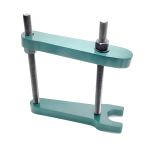
Using a VEEM Interceptor Strip Tool
Installing interceptor strips is much easier with a dedicated tool designed for the job.
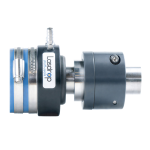
The VEEM Interceptor Strip Tool helps divers slide the strips into position and remove them safely without damaging the blade or the groove.
The tool allows you to:
-
Remove interceptor strips more easily
-
Install new strips with better control
-
Reduce the chance of damaging the propeller
-
Speed up in-water adjustments
For vessels that regularly adjust interceptor configurations, the tool makes the process significantly faster and more reliable.
When Should Interceptor Strips Be Adjusted?
Interceptor strips are commonly adjusted when:
-
A vessel is repowered with new engines
-
Engine RPM falls outside the recommended range
-
The vessel’s operating load changes
-
Seasonal water temperatures affect performance
-
Operators want to improve fuel efficiency
Because the strips can be replaced underwater, adjustments can be made quickly without taking the vessel out of service.
A Flexible Approach to Propeller Optimization
Interceptor technology has become one of the most practical innovations in modern fixed-pitch propeller design.
Instead of machining or replacing propellers, operators can simply change interceptor strip height to fine-tune performance.
For many vessels, this provides a fast and cost-effective way to keep engines operating within their ideal range while maintaining efficient propulsion.
With the right configuration and the proper installation tools, VEEM interceptor strips allow propeller performance to be optimized in minutes rather than days.
Leave a comment